
Features Explained
Massage Chair Features Explained: 2D, 3D, 4D, L-Track, Air Bags and More
October 28, 2026 · 11 min read
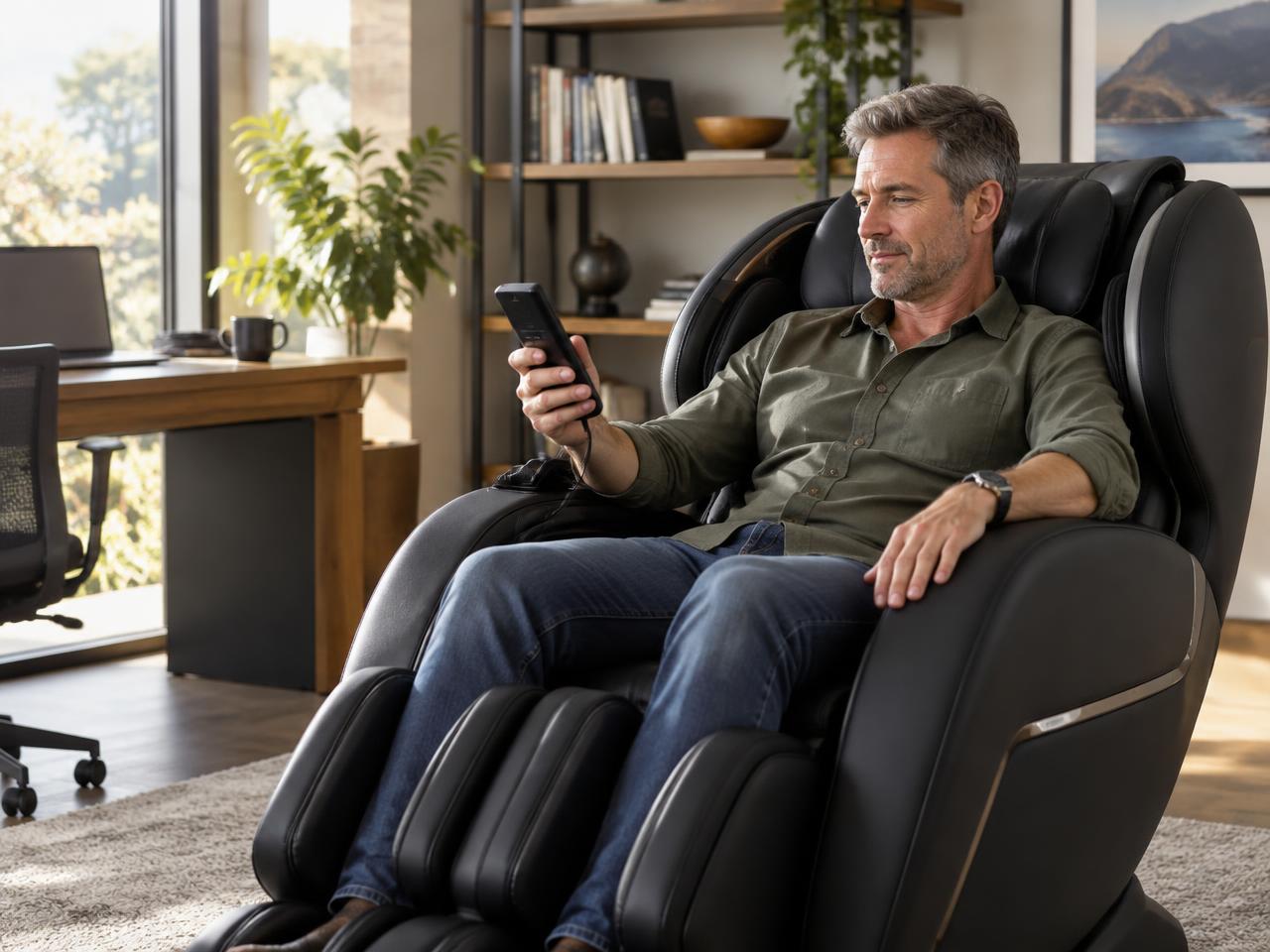
Shopping for a massage chair can feel like learning a new language. Product listings are full of terms like 4D rollers, SL-track, body scanning and 3-stage zero gravity. They all sound impressive — but what do they actually mean, and which ones are worth paying for?
This guide breaks down the most common features in plain English, so you can compare chairs side by side and choose one that genuinely suits the way you'll use it.
Roller mechanisms: 2D, 3D and 4D
The roller mechanism is the heart of a massage chair. It's the set of rollers that moves along your back and shoulders.
- •2D — rollers move up/down and side to side. Simple and effective, common in entry-level chairs
- •3D — adds forward and back movement, so rollers can press deeper or lighter. Lets you adjust intensity
- •4D — adds variable speed and rhythm, so the massage feels less mechanical and more like human hands
- •Dual mechanism — two separate roller sets, often one for the upper back and one for the lower back and seat
Roller tracks: S-track, L-track and SL-track
The track is the path the rollers follow.
- •S-track — follows the natural S-curve of your spine from neck to lower back
- •L-track — continues under the seat to reach the glutes and the top of the hamstrings
- •SL-track — combines both, following the spine's curve and extending under the seat. Often the most complete coverage
Body scanning
Body-scanning chairs use sensors to measure your shoulder height and spine shape when you first sit down. The chair then adjusts the roller path to suit you. This is especially useful in households where people of different heights share the chair.
Zero gravity recline
Zero gravity tilts the chair back so your legs are raised to around the level of your heart. Your weight spreads more evenly, which many people find very relaxing. Some chairs offer one position; others have two or three stages so you can choose how far to recline.
Space-saving design
Traditional recliners need room behind them. Space-saving or 'wall-hugger' chairs slide forward on a rail as they recline, so they can sit just a few centimetres from the wall — ideal for apartments and smaller rooms.
Air compression massage
Air bags inflate and deflate to squeeze and release areas the rollers can't easily reach. Chairs vary from a handful of air bags to dozens.
- •Shoulders and arms — wrap the upper body and hands
- •Hips and seat — gently compress the sides of the hips
- •Calves and feet — a very popular feature for tired legs
Heat therapy
Heating elements, usually in the lower back and sometimes the seat, calves or feet, provide gentle warmth during a session. Many owners say it's the feature they use most, particularly in winter.
Foot rollers and extendable leg rests
Foot rollers work the soles of your feet with rotating nodes. An extendable leg rest slides out to suit taller users, so your feet sit properly in the foot well. If you're over 180 cm, always check the recommended maximum height.
Auto programs and manual controls
Auto programs combine techniques — kneading, tapping, rolling, shiatsu — into a set routine, such as 'relax', 'stretch' or 'neck and shoulder'. Manual controls let you choose the technique, area, speed and intensity yourself. Most people use auto programs day to day, so a good range of them is worth having.
Comfort and convenience extras
- •Bluetooth speakers — play music or podcasts during your session
- •Touch-screen remote — easier to navigate than small buttons
- •Voice control — on some premium models
- •USB charging and wireless phone charging
- •Ambient lighting — a nice touch for evening use
- •Quiet operation — important if the chair lives in a shared room
Which features are worth paying for?
Start with the essentials: a roller mechanism and track that cover the areas you care about, a chair that fits your height, and a size that fits your room. After that, prioritise the features you'll use weekly — for most people that's heat, zero gravity, foot rollers and a good set of auto programs. Extras like speakers and lighting are pleasant but rarely the deciding factor.
A quick comparison checklist
- •Who will use it, and how tall are they?
- •Where will it go, and how much space is behind it?
- •Which areas matter most — neck, back, glutes, legs or feet?
- •Do you want deeper intensity (3D/4D) or gentle relaxation?
- •How often will you use heat and zero gravity?
- •What's your comfortable budget?
Once you know your answers, our Compare page lets you put up to four chairs side by side, and our Chair Finder can suggest models that match. If you'd still like a hand, get in touch — we're happy to help.